
MIRA – rental software for the industry, with PartnerLIFT
Case · Industry & SaaSAbout the project
MIRA is the rental software from the PartnerLIFT GmbH ecosystem – an SaaS platform for equipment rental that lets rental companies for aerial work platforms, construction machinery, cranes and telescopic forklifts run their daily operations: dispatching, digital handovers, e-invoicing, route planning, machine and customer management. More than 50 rental companies in Germany and Austria use MIRA in production, and in 2025 the product was shortlisted for the IAPA Award in the Digital Development category.
appfarms is responsible for the technical implementation – architecture, frontend, both backends, deployment and observability – together with the PartnerLIFT team and experienced dispatchers from the industry.
What we built
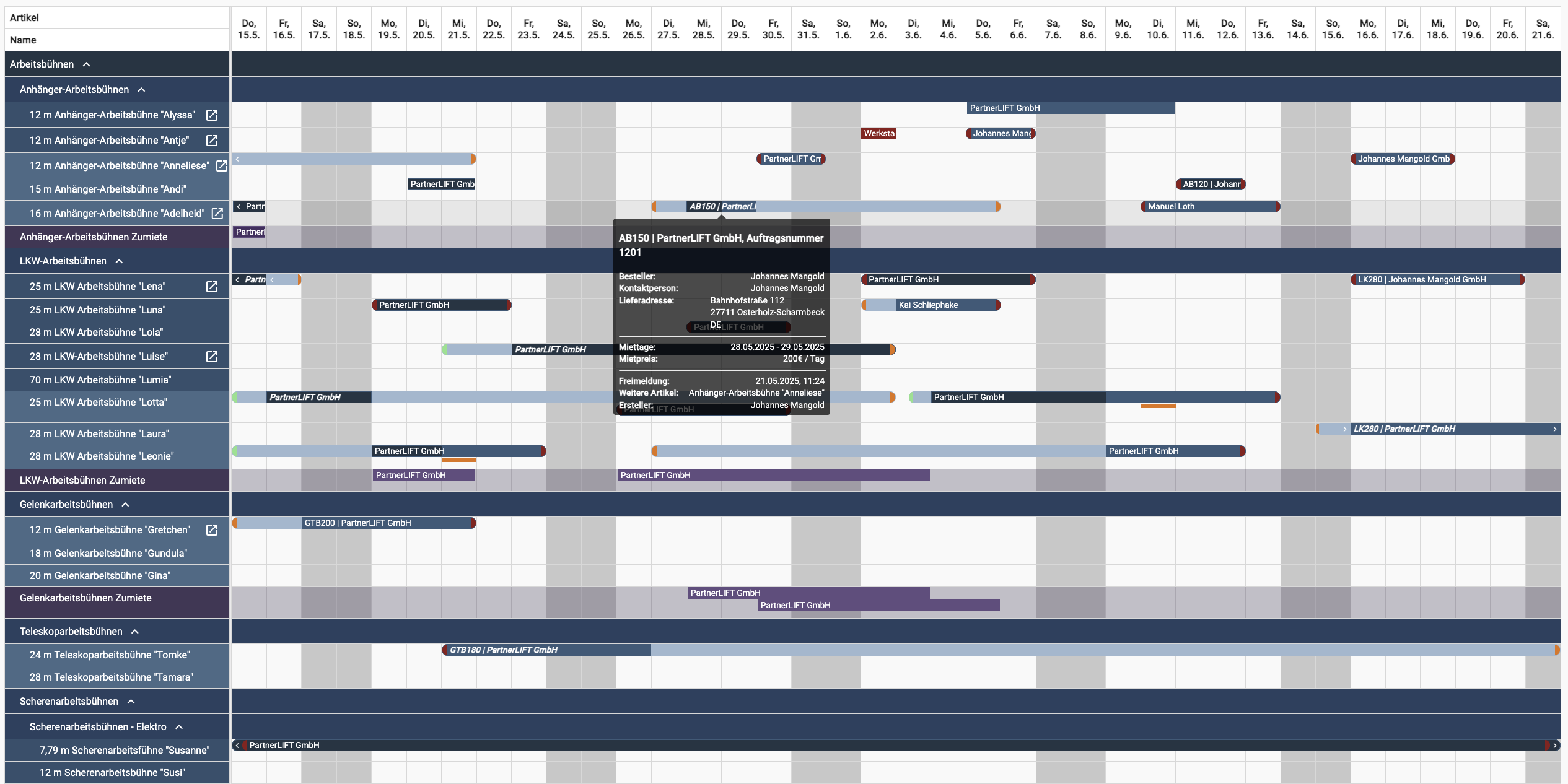
- Angular SPA with FullCalendar – the calendar is central to scheduling. Every machine, every request, every order has to be visible at a glance and editable in a few clicks.
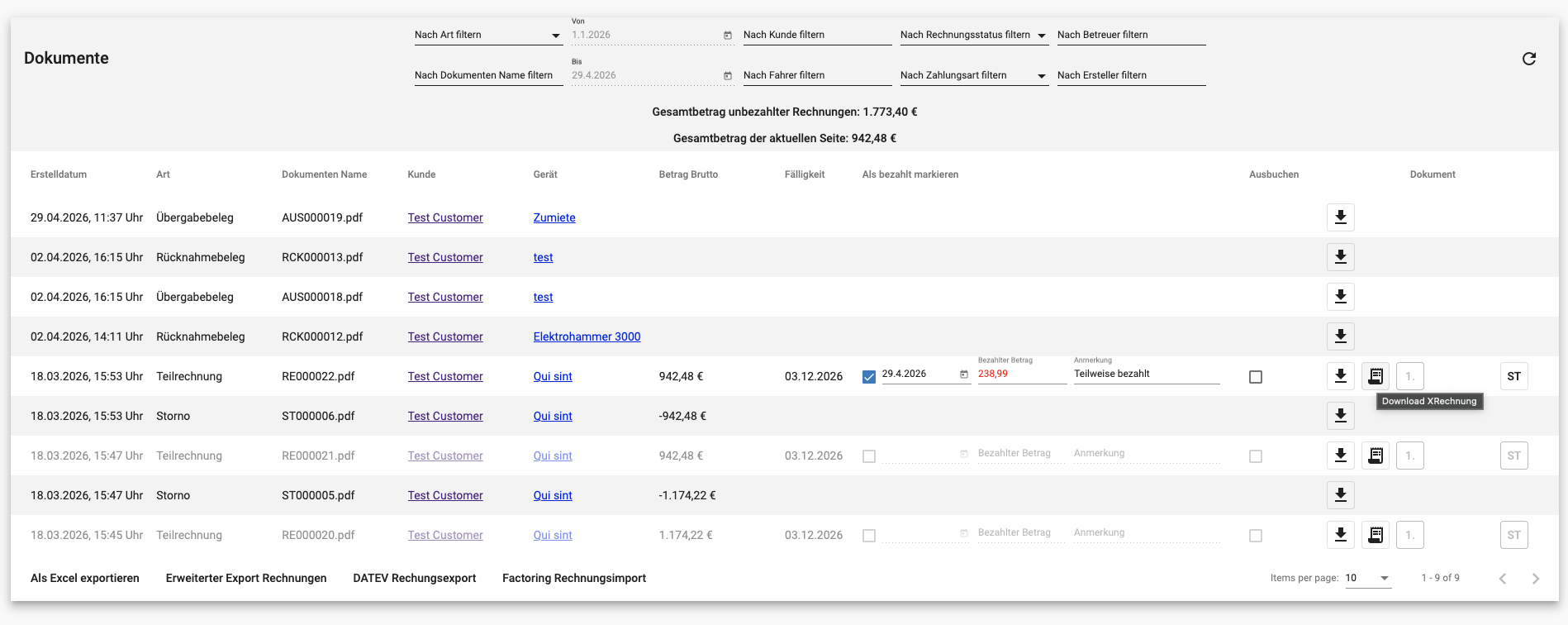
- Main backend (Spring Boot / Kotlin / MySQL) – the core application: master data, orders, documents. Documents are generated with PDFBox, e-invoices are produced via Mustang, and a purpose-built DATEV exporter delivers the accounting data straight into the tools of accountants.
- Second backend (Bun / Hono / Prisma / Zod) – lean and fast to iterate on for new, isolatable modules and integrations. We pick the tool that fits the task, not the other way around.
- Partial caching – frequently read data (such as availability in the dispatching calendar) is deliberately cached, while invoicing- and documentation-critical paths never depend on stale values.
- Dockerised, scalable deployment with GitLab CI/CD – reproducible, automated, horizontally scalable.
- Observability with Prometheus & Grafana – metrics, dashboards, alerts. These help us track the health of the platform and respond to issues.
Why this combination makes sense
Rental software that dispatchers use productively every day has two hard requirements: speed on screen and accuracy in the numbers. Outdated availability information or a missing invoice costs time and money.
We solve that with an architecture that deliberately combines several tools – each used where it plays to its strengths:
- Angular for a maintainable, data-intensive frontend with calendars and many forms.
- Spring Boot/Kotlin for the established core backend including document generation, e-invoicing and DATEV export.
- Bun/Hono/Prisma/Zod for new modules that need to ship quickly and stay type-safe.
- Partial caching instead of full dependency on a single heavy layer.
- Docker + GitLab CI/CD for identical environments from a developer laptop to production.
- Prometheus + Grafana for continuous monitoring of the system.
This is not a buzzword stack. It is a deliberately chosen toolset for software that has to be reliably fast in everyday operations.
MIRA Übergabe – the mobile companion
For drivers out on site there is the MIRA Übergabe Android app on Google Play – a native Android companion to the web dispatching tool. Drivers document handovers and returns paperlessly, capture damages with photos, and generate receipts straight on the phone. Tours are navigated with Google Maps; when the phone is offline the app keeps the data locally and syncs as soon as a connection is available.
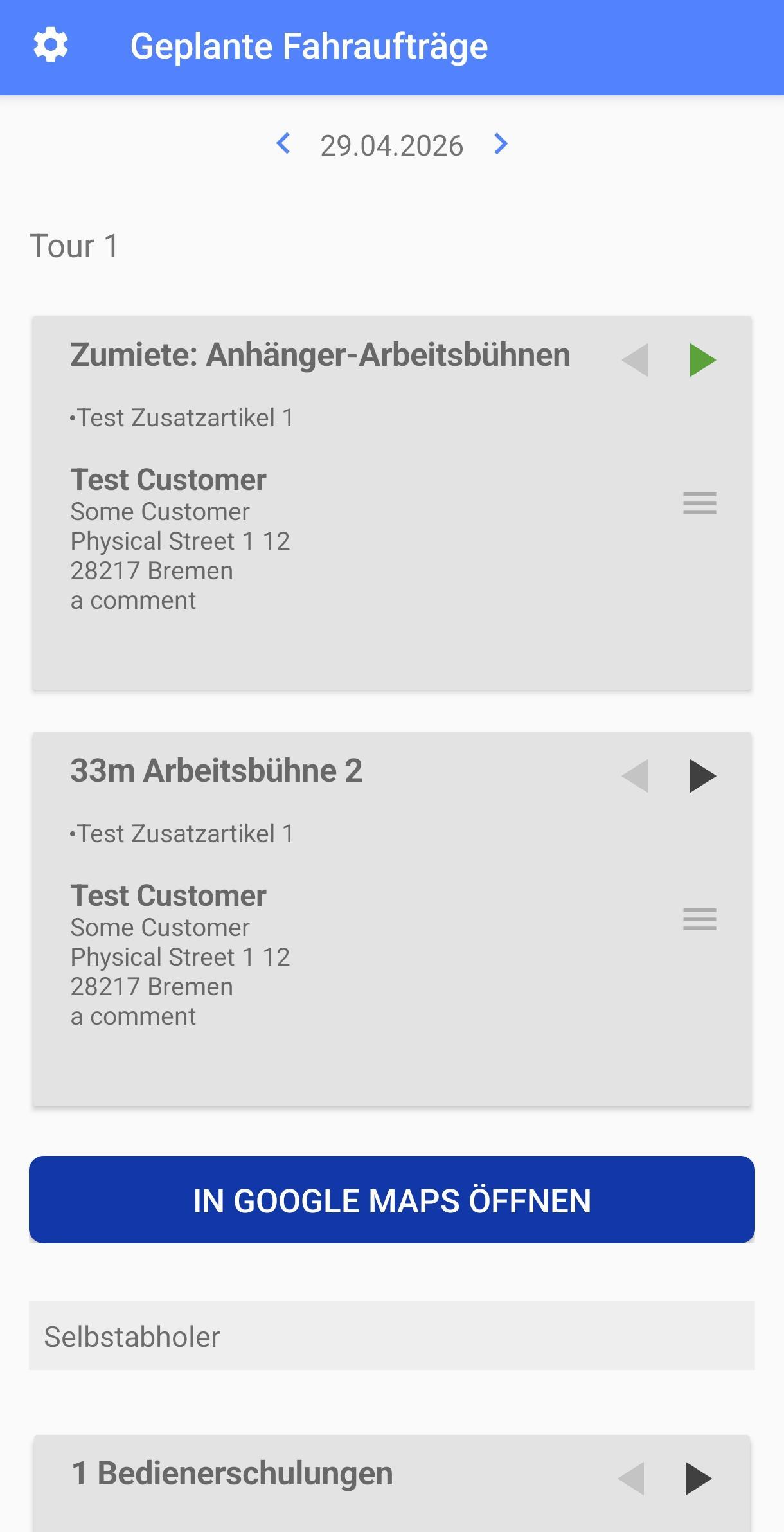
Daily view: tours, orders, one tap to Google Maps. 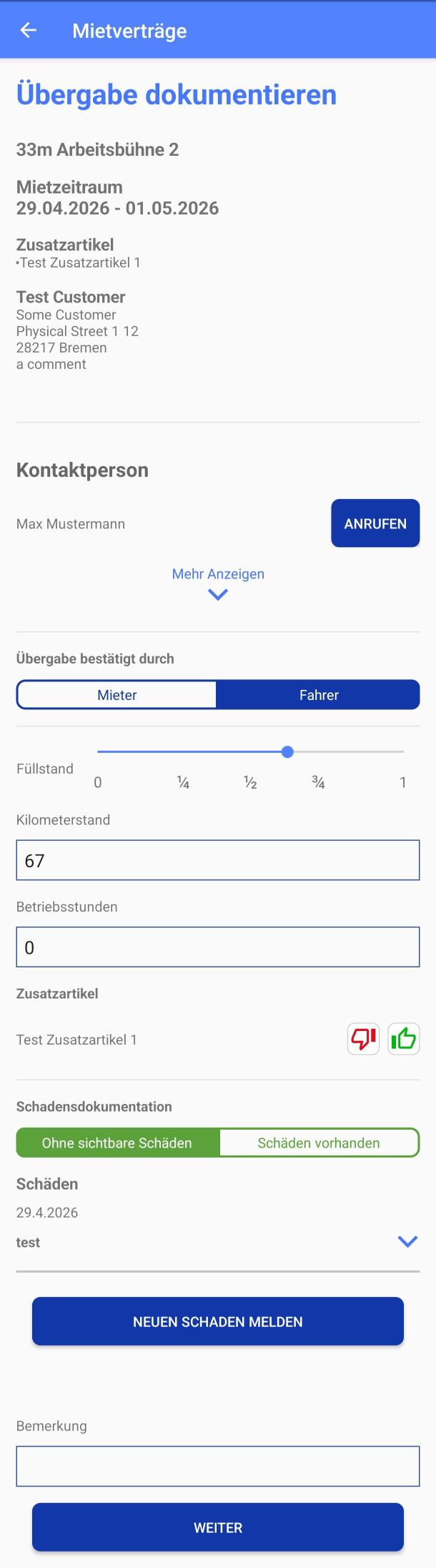
Handover documentation: fill level, mileage, damages – captured on the device.
What does this mean for your project?
If you are planning industry software with invoicing, documents, e-invoicing and accounting integration – or modernising an existing solution without disrupting live operations – let’s talk. MIRA shows how we bring frontend, JVM backend, Bun backend, deployment and observability together so that users get faster, not slower.
Sources
The figure of more than 50 rental companies is published on the MIRA product website (accessed in September 2026). The provider also reports the 2025 IAPA nomination there.
Challenge
Renting out aerial work platforms and construction machinery is fast-paced day-to-day business – one machine comes back, another has to go out, the customer is waiting on a quote, the dispatcher on an available unit. An industry application has to keep up with that pace and at the same time invoice cleanly, record damage, plan routes and integrate with accounting and telematics. MIRA has to work for rental companies with 30 to ~1,000 machines, be quick to onboard and continuously evolve without disrupting existing customers.
Solution
appfarms designed and built the platform together with experienced dispatchers in the industry and the PartnerLIFT team. The frontend is an Angular SPA with FullCalendar as the dispatching calendar. The main backend runs on Spring Boot / Kotlin with MySQL, integrated with PDFBox for documents, Mustang for e-invoicing and a purpose-built DATEV exporter. A second backend runs on Bun, Hono, Prisma and Zod – leaner, faster to iterate on, ideal for new interfaces and modules. Partial caching delivers speed without sacrificing accuracy. Deployment is fully dockerised and horizontally scalable, CI/CD runs on GitLab, and Prometheus and Grafana provide observability and alerting in production.
Outcome
According to the provider, more than 50 rental companies in Germany and Austria use MIRA (as of September 2026). In 2025, MIRA was nominated for the IAPA Award (International Award for Powered Access) in the Digital Development category. For us at appfarms, MIRA is a flagship reference for two reasons: it shows our breadth – Angular SPA, JVM backend, Bun backend, dockerised deployment, observability – and it proves our strength in long-term product partnerships.
“A real success – because the team consistently focuses on exactly the levers our customers need most urgently. Agile development paired with deep technical expertise, true commitment, and a great instinct for simple solutions.”
Translated from German.
Frequently asked questions
What exactly is MIRA?
A web-based rental software for companies renting out aerial work platforms, construction machinery, cranes and telescopic forklifts. MIRA combines dispatching, digital machine handovers, e-invoicing, route planning and machine management in a single application.
What is appfarms' role in the project?
appfarms is responsible for the technical implementation – architecture, frontend, backends, dockerised deployment and observability. The product itself is shaped in close coordination with the PartnerLIFT team and experienced dispatchers from the industry.
Why two backends?
Pragmatism over dogma. The Spring Boot/Kotlin backend carries the well-established core business with MySQL, PDFBox, Mustang e-invoicing and DATEV export. For newer, cleanly separable modules we use a second backend on Bun, Hono, Prisma and Zod – leaner, faster to iterate on and easy to operate. Both worlds are dockerised and scale horizontally.
How do you ensure speed without serving stale data?
Partial caching at the right layers. Frequent read operations – like availability in the dispatching calendar – are cached deliberately, while critical paths such as invoicing or damage documentation never depend on stale values. The software stays noticeably fast and at the same time accurate.
How is the platform monitored?
With Prometheus for metrics and Grafana for dashboards and alerts. On top of that we run a dockerised, scalable deployment with CI/CD on GitLab. That gives us and PartnerLIFT a continuous view of the platform's health – and anomalies surface early, where they can still be fixed.